
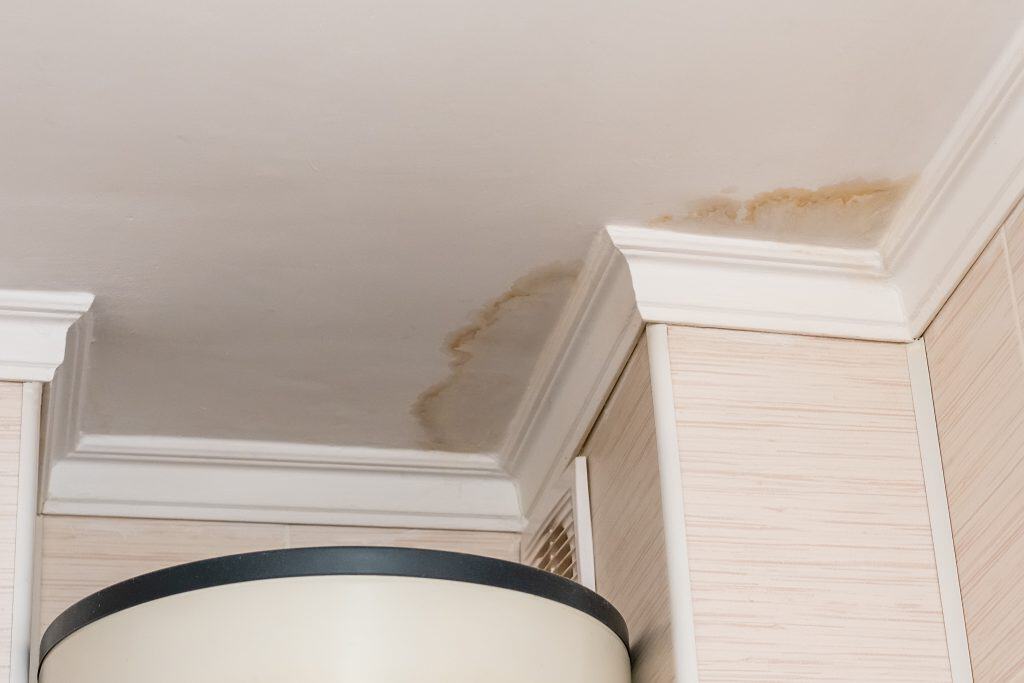
How to Fix Water Stains on Painted Ceilings
A brown or yellow stain spreading across a painted ceiling is one of those problems that Somerset West and Helderberg homeowners often notice after winter rain, a roof leak, a plumbing issue or months of slow moisture movement above the ceiling. The first instinct is usually to cover it with white ceiling paint, but that almost always fails if the source of the water has not been fixed first.
A water stain on a ceiling is rarely just a paint problem. It is normally a warning sign that water has moved through the ceiling board, plaster, skim coat or roof space. The stain may come from a roof leak, blocked gutter, cracked ridge cap, failed flashing, bathroom leak, geyser overflow, plumbing leak, condensation, damp roof space, old water damage or a previous repaint where stain-blocking primer was not used.
This article explains how to fix water stains on painted ceilings properly before repainting. It is written for homeowners looking for Painters Somerset West, Helderberg Painters, interior painting, roof painting, damp proofing and preparation-first ceiling repainting advice.
Painting Contractors Somerset West is not a lead-generation painting company. Clients deal directly with an established painting contractor using full-time employed painters, a working foreman on site daily, written diagnostic reports and clear written scopes of work.
Why Water Stains Appear on Painted Ceilings
A water stain appears when moisture moves through ceiling board, plaster or skim coat and carries dirt, tannins, rust, roof-space dust or old residue with it. That is why ceiling stains often appear brown, yellow or grey instead of simply looking wet.
The stain may come from a current leak, but it can also be old water damage that was never sealed properly before repainting. Normal ceiling paint does not block stains well. If a stain-blocking primer is not used, the old mark can bleed through the new paint even after the leak has been repaired.
Common causes include roof leaks, blocked gutters, cracked ridge caps, failed flashings, loose roof tiles, roof-to-wall junction defects, parapets, plumbing leaks, bathrooms above ceilings, leaking showers, geyser overflow, drip tray issues, condensation, poor ventilation, mould and damp ceiling boards.
Somerset West and Helderberg Ceiling Stain Conditions
Somerset West and the Helderberg get heavy winter rain, strong seasonal weather and moisture patterns influenced by the mountain, coastal air and nearby areas such as Strand and Gordon’s Bay. Roofs, gutters, valleys, downpipes and ridge caps work hard during winter, especially on older homes, estates, guesthouses, rental properties and high-ceiling homes.
Homes in Somerset West can also have ceiling stains caused by older roof details, blocked gutters filled with leaves and debris, roof tile movement, old waterproofing, roof-space condensation, bathrooms above living areas, geyser overflow pipes, plumbing leaks and previous repairs that were never sealed correctly before repainting.
For wider area support, this article also links naturally to Painters Stellenbosch and Cape Winelands Painters, because roof leaks, damp ceilings and water-stained interiors are common across the Helderberg and Winelands climate zone.
Roof Leaks and Roofline Problems
Roof-related leaks are one of the most common causes of ceiling water stains. Water may enter through cracked ridge caps, loose or slipped roof tiles, damaged roof sheets, failed flashings, blocked gutters, leaking downpipes, roof valleys, parapets or roof-to-wall junctions.
One of the confusing things about roof leaks is that the stain does not always appear directly below the leak. Water can travel along rafters, trusses, battens, ceiling brandering or roof insulation before dripping onto the ceiling board. That means the visible stain may be some distance away from the actual entry point.
Roof painting does not fix active leaks. A roof coating protects a sound roof; it does not repair a roof that is already allowing water in. If a leak is causing a ceiling stain, the leak must be physically repaired before ceiling repainting starts. Our roof painting approach is based on this principle: roof defects must be resolved before coating or repainting affected areas.
Plumbing, Bathrooms and Geyser-Related Ceiling Stains
Not every ceiling stain comes from the roof. If there is a bathroom, shower, bath, toilet, basin, kitchen or geyser above the stained ceiling, plumbing should also be checked.
Slow leaks from pipes, shower trays, bath traps, toilet seals, basin waste pipes, geyser overflow pipes and drip trays can cause stains that grow gradually. The ceiling may only show a faint mark at first, followed by bubbling paint, peeling paint, mould, a musty smell or a spreading yellow-brown patch.
Where plumbing or geyser-related leaks are suspected, the leak must be repaired by the correct trade before the ceiling is repainted. Painting over the stain while the leak is active will not solve the problem.
Condensation and Damp Inside the Home
Ceiling stains can also be caused by condensation, especially in bathrooms, kitchens, poorly ventilated rooms and roof spaces with trapped warm air. Steam rises, cools against ceiling surfaces or roof-space areas, and creates damp conditions that can stain paint and encourage mould.
Condensation-related stains often appear with mould spots, grey patches, musty odours or bubbling paint near corners, extractor fans, downlights or high points in the room. In these cases, repainting must include cleaning, mould treatment, ventilation improvement where practical and the correct interior coating system.
Our interior painting process for stained ceilings looks at the source first, then the surface condition, and only then the repainting specification.
Can You Just Paint Over a Water Stain?
Not with ordinary ceiling paint. Standard ceiling paint is not designed to block the tannins, rust, dirt and residue left behind by water movement. Even if the ceiling looks dry, an old stain can bleed through a new coat of paint within days or weeks if the correct stain-blocking primer is not used.
There are two separate issues to deal with. First, the water source must be fixed. Second, the stain must be sealed properly before repainting. If the source is still active, the stain will return. If the source is fixed but the stain is not sealed, the old mark may still bleed through.
The Correct Process to Fix Water Stains on Painted Ceilings
A proper ceiling stain repair should follow a clear sequence. Skipping the first steps and going straight to paint is the reason many stains return.
- Identify the actual source of the moisture.
- Fix the roof leak, plumbing leak, geyser issue, gutter problem or damp source.
- Allow the ceiling to dry fully before preparation starts.
- Check whether the ceiling board, plaster or skim coat is damaged.
- Treat any mould around the stained area.
- Scrape away loose, bubbling or flaking paint.
- Sand the affected area smooth.
- Repair damaged filler, skim coat or board where needed.
- Apply a proper stain-blocking primer over the stained area.
- Prime repaired sections where needed.
- Repaint with suitable ceiling paint.
- Inspect again once the ceiling is fully dry.
The ceiling must be dry before sanding, priming and painting. Painting over damp ceiling board can cause poor adhesion, bubbling, peeling, mould and repeat staining.
When Ceiling Board Must Be Repaired or Replaced
Sometimes the ceiling has taken too much water damage for paint alone to solve the problem. If the board is sagging, soft, swollen, crumbling, mouldy or separating at the joints, it may need repair or replacement before repainting.
Warning signs include sagging ceiling board, soft patches, crumbling plaster, swollen joints, peeling skim coat, repeated stains in the same area, mould around the stain, cracking, flaking paint and ceiling sections that feel unstable. In these cases, painting over the damage will only hide the problem temporarily.
Common Mistakes to Avoid
Ceiling water stains usually come back when the preparation is rushed or the source is ignored. Avoid these common mistakes:
- Painting before the leak or damp source is fixed.
- Painting while the ceiling is still damp.
- Skipping stain-blocking primer.
- Painting directly over mould.
- Ignoring blocked or overflowing gutters.
- Ignoring cracked ridge caps, failed flashings or roofline defects.
- Ignoring plumbing leaks above the ceiling.
- Assuming roof painting will fix an active leak.
- Using cheap paint over a stain instead of stain-blocking primer.
- Not checking whether the ceiling board is damaged.
- Only patch-painting a visible stain when the full ceiling needs repainting for an even finish.
When Somerset West Homeowners Should Call a Professional Painter
A small, old stain from a leak that has definitely been repaired may be manageable as a small repair. But larger, repeated or uncertain ceiling stains should be assessed properly before painting.
Call a professional painter when a stain keeps returning after repainting, appears after rain, spreads across the ceiling, bubbles or peels, has mould around it, affects more than one room, appears below a bathroom, appears near a geyser, affects a rental property, guesthouse, estate home or body corporate unit, or when the leak source is unclear.
For managed properties, our body corporate and estate painting service can assist with written scopes, access planning, common-area protection and preparation-first repainting where suitable.
How Painting Contractors Somerset West Fixes Ceiling Water Stains
Painting Contractors Somerset West is not a lead-generation company. When you contact us, you deal directly with an established painting contractor. Every quotation is supported by a written diagnostic report, so you understand what is causing the stain before any work is priced.
Every project runs on a clear written scope of work. Our painters are full-time employees, not subcontractors, and a working foreman is on site daily to oversee preparation, protection, painting, clean-up and quality control. We carry Public Liability Insurance through OUTsurance and work to supplier or manufacturer-backed coating specifications where applicable.
We will always be clear that paint does not fix active damp and roof painting does not fix active leaks. Those issues must be resolved at the source before ceiling repainting starts.
Where damp, roof leaks, mould, poor adhesion and old stains are properly resolved first, properly prepared interior paintwork can maintain its integrity for approximately 8 to 10 years, depending on exposure and maintenance. Roof coatings can maintain integrity for approximately 7 to 8 years where qualifying specifications are followed and roof defects are fixed first.
Related Painting Services and Local Areas
This article supports practical ceiling stain and interior repainting advice across Somerset West and the Helderberg. For related location pages, visit Painters Somerset West, Helderberg Painters, Painters Strand, Painters Gordon’s Bay, Painters Stellenbosch and Cape Winelands Painters.
For related services, visit our Painting Services, Interior Painting, Roof Painting, Damp Proofing Cape Town, Residential Painters Cape Town, Commercial Painters Cape Town, Body Corporate and Estate Painting Cape Town and Cape Town Painting Service Areas.
Get a Somerset West Ceiling Painting Quotation
If a ceiling in your Somerset West or Helderberg home has a water stain, start with a proper diagnosis before repainting. The source of the water must be fixed, the ceiling must be dry, and the stain must be sealed correctly before repainting.
Call 082 374 6862 or visit our contact page to request a written diagnostic quotation.
Ceiling Water Stain FAQs for Somerset West Homes
Why is there a brown stain on my ceiling?
A brown or yellow ceiling stain usually means water has moved through the ceiling board, plaster or skim coat. It can come from a roof leak, plumbing leak, geyser issue, condensation, old water damage or stain bleed from a previous leak.
Can I paint over a water stain on a ceiling?
Not with ordinary ceiling paint. The source of the water must be fixed first, the ceiling must dry properly, and a stain-blocking primer is normally needed before repainting.
Why does a ceiling stain come back after painting?
A ceiling stain usually returns because the leak was never fixed, the ceiling was still damp, or stain-blocking primer was not used before repainting.
What causes ceiling paint to bubble after rain?
Ceiling paint that bubbles after rain usually points to moisture coming from above, often through a roof leak, blocked gutter, cracked ridge cap, failed flashing or roof-to-wall junction defect.
Can a roof leak cause ceiling stains?
Yes. Roof leaks are one of the most common causes of ceiling water stains. Water can travel through the roof space before appearing as a stain some distance away from the actual leak point.
Can roof painting fix active leaks?
No. Roof painting protects a sound roof, but it does not fix active leaks. Leaks, failed flashings, cracked ridge caps, blocked gutters and roof defects must be repaired before roof coating or ceiling repainting starts.
Do I need stain-blocking primer before repainting a ceiling?
In most cases, yes. Stain-blocking primer seals the residue from old water damage so the brown or yellow mark does not bleed through the new ceiling paint.
How long must a ceiling dry before repainting?
The ceiling must be fully dry before sanding, priming and painting. The drying time depends on the severity of the leak, the ceiling material, ventilation and humidity. Painting too soon can cause bubbling, peeling or repeated staining.
Should mould on a ceiling be painted over?
No. Mould must be treated and cleaned before repainting. Painting over active mould does not remove the problem and can lead to stains, odours and further growth through the new coating.
When does ceiling board need to be replaced?
Ceiling board may need repair or replacement when it is sagging, soft, swollen, crumbling, mouldy, repeatedly staining, separating at the joints or when the skim coat has failed.
Can plumbing leaks cause ceiling water stains?
Yes. Leaking pipes, showers, baths, toilets, geysers, overflow pipes and drip trays above a ceiling can all cause water stains, bubbling paint or mould patches.
How do I prevent ceiling stains from returning?
Fix the moisture source first, allow the ceiling to dry fully, repair damaged board or plaster, treat mould, apply stain-blocking primer and repaint with a suitable ceiling paint.
How do I request a Somerset West ceiling painting quotation?
Call 082 374 6862 or visit the Painting Contractors Somerset West contact page to request a written diagnostic quotation for ceiling stain preparation and repainting.