
What Is Damp Proofing and Do You Need It Before Painting?
If you live in Muizenberg or anywhere along False Bay, you may have seen the same wall bubble, peel, stain or grow mould even after being repainted. Coastal homes in this area are exposed to sea air, salt residue, winter rain, wind-driven rain, older plaster, shaded walls, boundary-wall moisture, roofline water and bathroom humidity. When those conditions are not dealt with before repainting, the paint often fails early.
Damp proofing before painting is not simply applying a stronger paint. It is the process of identifying where moisture is coming from, treating or controlling that moisture, allowing the surface to dry, preparing the wall correctly and then applying the right primer and coating system. Paint does not fix active damp. If the damp source is still active, the new paint can bubble, peel, flake, stain or grow mould again.
This article explains what damp proofing is, when Muizenberg and False Bay homes need it before repainting, and why a proper diagnosis matters before any coating system is applied. It supports homeowners looking for Painters Muizenberg, False Bay Painters, Damp Proofing Cape Town, Exterior Painting and preparation-first coastal repainting advice.
Painting Contractors Somerset West assists with suitable painting projects in Muizenberg and False Bay where project size, access and timing make sense. We are not a lead-generation painting company. Clients deal directly with an established painting contractor using full-time employed painters, a working foreman on site daily, written diagnostic reports and clear written scopes of work.
What Is Damp Proofing?
Damp proofing is the process of identifying, treating and controlling moisture movement before painting. It can involve checking rising damp, penetrating damp, condensation, boundary-wall damp, parapet leaks, roofline water, cracked plaster, failed waterproofing, bathroom moisture, kitchen moisture, roof leaks and drainage problems.
The correct damp-proofing approach depends on the cause. A wall affected by rising damp is different from a wall affected by wind-driven rain. A boundary wall affected by soil moisture is different from an internal bathroom wall affected by condensation. A parapet leak is different from salt contamination on an exposed exterior wall.
Standard painting assumes the wall is dry, clean and stable. Damp-proofing work starts when the wall is not dry, not stable or not ready for paint. The aim is to create a surface that can hold the paint system properly instead of trapping moisture under a new coating.
Why Muizenberg and False Bay Homes Are Prone to Damp
Muizenberg sits in a coastal environment where sea mist, salt air, winter rain and wind-driven rain all affect painted surfaces. Exterior walls collect salt and grime. Older plaster can become porous. Shaded elevations can stay damp for longer. Rooflines and parapets can allow water to enter quietly before a stain appears. Bathrooms and kitchens can add internal condensation and mould problems.
The wider False Bay coastline has similar painting conditions. Homes in Fish Hoek, Simon’s Town, Kalk Bay, St James, Glencairn and Clovelly can experience coastal damp, salt exposure, mould, algae, older coatings, roofline defects, boundary-wall moisture and repeated paint failure.
Flats, apartments, rental homes, guesthouses and older coastal buildings often have several damp sources at once. That is why damp problems in Muizenberg should be diagnosed properly before repainting instead of guessed at.
Types of Damp That Affect Painted Walls
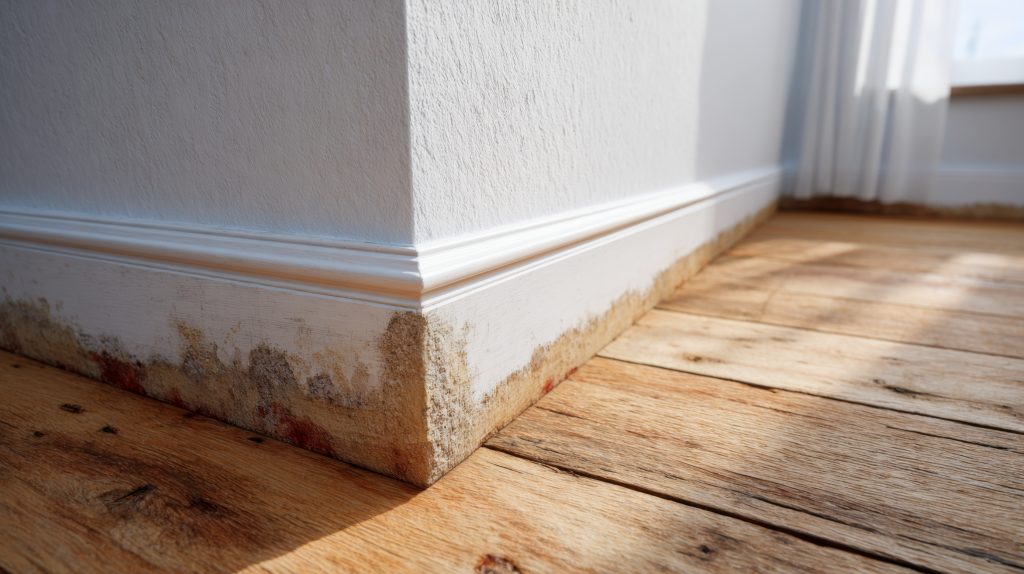
Rising damp moves upward from the ground through the lower part of a wall. It is often seen near skirting lines, wall bases, exterior plinths and lower plaster areas where there is no effective damp-proof course or where moisture is bypassing the barrier.
Penetrating damp enters from outside through cracks, porous plaster, failed joints, exposed exterior walls, window reveals, parapets, roof-to-wall junctions or wind-driven rain. This is common on coastal walls exposed to weather.
Condensation damp comes from steam, humidity and poor ventilation. Bathrooms, kitchens, bedrooms with poor airflow and closed-up coastal homes can develop mould, damp smells and paint failure even when there is no roof leak.
Roofline damp comes from blocked gutters, leaking downpipes, cracked ridge caps, failed flashings, leaking parapets and roof-to-wall defects. Roof painting does not fix active leaks. Roof defects must be repaired before affected walls are repainted.
Boundary-wall damp is caused by moisture moving through from soil, garden beds, irrigation, poor drainage or retaining-wall pressure. These walls often fail even when the front face is repainted properly because the moisture source is behind the wall.
Signs You May Need Damp Proofing Before Painting
You may need damp proofing before painting if the same area fails repeatedly or if the wall shows signs that moisture is active. Common warning signs include:
- Bubbling paint.
- Peeling or flaking paint.
- Mould or algae growth.
- Brown, yellow or grey stains.
- White powdery salt deposits or efflorescence.
- Flaking, soft or crumbling plaster.
- A persistent damp or musty smell.
- Paint lifting near the base of a wall.
- Wall patches that feel colder or wetter than surrounding areas.
- Repeated paint failure after previous repainting.
- Damp marks below rooflines, parapets, gutters or windows.
- Boundary walls that bubble or peel soon after repainting.
One sign may be enough to investigate. Several signs together usually mean the wall needs diagnosis before painting.
Why Paint Over Damp Fails
Paint applied over active damp traps moisture under the coating. That moisture builds pressure, weakens adhesion and pushes the paint film away from the wall. The result is bubbling, blistering, peeling, stains, mould and early coating failure.
A wall may look better for a few weeks after repainting, but if moisture is still moving through the plaster, the problem usually returns. In some cases, the new paint fails faster than the previous paint because the wall now has more coating layers trapping moisture.
This is why the correct sequence is diagnosis first, damp treatment second, surface preparation third and painting last. Paint is the finish. It is not the cure for active damp.
Boundary Walls, Retaining Walls and Garden Walls
Boundary walls, retaining walls and garden walls are some of the most common damp-failure areas in Muizenberg and False Bay. These walls are often exposed to rain from the front and soil moisture from behind. Irrigation, planted beds, poor drainage and damp soil can keep the wall wet long after the weather has cleared.
Retaining walls face an even bigger challenge because they hold back damp soil. If waterproofing, drainage or wall design is poor, moisture pushes through the wall and lifts the paint. Painting the visible face alone will not stop water entering from behind.
These walls need realistic assessment. Sometimes the correct recommendation may include drainage changes, irrigation adjustment, crack repair, waterproofing from the correct side, plaster repairs, suitable primers, breathable systems or ongoing maintenance expectations.
Rooflines, Parapets and Gutters
Water from above is a major cause of damp walls. Blocked gutters can overflow down exterior walls. Leaking downpipes can wet the same area repeatedly. Failed flashings around roof junctions can allow water to track behind plaster. Parapets can crack, hold water or fail at the waterproofing layer.
Older coastal homes with flat roofs, parapets and complex roofline details need particular care. A damp wall below a parapet should not be repainted until the parapet and roofline have been checked properly.
Roof painting does not fix active leaks. Our Roof Painting approach treats roof coating as a protective coating for a sound roof, not a repair for active water entry. If a roofline or parapet is causing damp, that defect must be repaired before repainting affected walls.
Interior Damp: Bathrooms, Kitchens and Condensation
Interior damp often appears in bathrooms, kitchens, bedrooms, cupboards, corners and ceilings. Steam from showers and cooking condenses on cooler surfaces. Poor ventilation keeps moisture trapped. Over time, paint can bubble, peel or grow mould.
Muizenberg homes, flats, rental properties and guesthouses can be especially vulnerable where rooms stay closed, ventilation is limited or moisture builds up during winter. Painting over mould or condensation-related damp without treating the cause will normally lead to repeat staining and paint failure.
Our Interior Painting process considers moisture, mould, ventilation and surface preparation before recommending the final paint system.
The Correct Damp-Proofing-Before-Painting Process
A proper process for damp-affected walls should follow a clear sequence:
- Inspect the damp-affected area thoroughly.
- Identify the actual moisture source.
- Check rooflines, gutters, parapets, cracks and window reveals.
- Check bathrooms, kitchens, ceilings and plumbing where relevant.
- Remove loose paint and damaged plaster where needed.
- Treat mould and algae before painting.
- Repair cracks properly.
- Improve drainage, irrigation or soil-contact issues where practical.
- Apply suitable damp treatment or waterproofing where applicable.
- Allow surfaces to dry fully.
- Wash salt, grime and chalking from exterior walls.
- Prime correctly for the substrate and condition.
- Apply a coating system suited to the damp source, exposure and wall type.
- Inspect again after the area has dried.
Skipping straight to painting without these earlier steps is the reason many damp walls need repainting again within a year or two.
Common Mistakes to Avoid
The following shortcuts often cause damp-related paint failure to return:
- Painting over active damp.
- Painting over mould instead of treating it first.
- Using waterproof paint without fixing the moisture source.
- Ignoring roof or parapet leaks.
- Ignoring boundary-wall moisture from soil or irrigation.
- Ignoring poor bathroom ventilation.
- Painting before walls have dried properly.
- Skipping primer.
- Painting over chalking, salt residue or unstable plaster.
- Choosing the cheapest quote without a proper diagnosis.
When Muizenberg Homeowners Should Call a Professional Painter
You should call a professional painter when damp returns in the same spot, paint bubbles or peels soon after repainting, mould keeps coming back, roofline stains appear, boundary walls fail repeatedly, bathroom mould does not go away or old coastal walls keep lifting paint.
Professional diagnosis is also important for apartments, sectional-title buildings, rental homes, guesthouses, older coastal homes, body corporate buildings and properties where several damp sources may overlap. In these cases, a written diagnosis is more valuable than another coat of paint applied on a guess.
For larger or managed properties, our Body Corporate and Estate Painting service can assist with written scopes, access planning, common-area protection and preparation-first repainting where suitable.
How Painting Contractors Somerset West Handles Damp Before Painting
Painting Contractors Somerset West assists with suitable painting projects in Muizenberg and False Bay where project size, access and timing make sense. We are not a lead-generation company. You deal directly with an established painting contractor, not a call centre or unknown subcontractor.
Every quotation involving damp is supported by a written diagnostic report, so you know what is causing the problem before any work is priced. Every project runs on a clear written scope of work. Our painters are full-time employees, not subcontractors, and a working foreman is on site daily to oversee preparation, protection, painting, clean-up and quality control.
We carry Public Liability Insurance through OUTsurance and work to supplier or manufacturer-backed coating specifications where applicable. With more than 20 years of painting experience, our approach is preparation-first because that is what determines whether the paint holds.
Where damp, poor adhesion, rust, mould, algae, cracking, chalking and roof defects are properly resolved first, correctly prepared paintwork can maintain its integrity for approximately 8 to 10 years, depending on exposure and maintenance. Roof coatings can maintain integrity for approximately 7 to 8 years where qualifying specifications are followed and existing roof defects are fixed first.
Related Painting Services and False Bay Areas
This article supports damp-proofing and coastal painting advice across Muizenberg and False Bay. For related location pages, visit Painters Muizenberg, False Bay Painters, Painters Fish Hoek, Painters Simon’s Town, Painters Kalk Bay, Painters St James, Painters Glencairn and Painters Clovelly.
For related services, visit our Painting Services, Damp Proofing Cape Town, Exterior Painting, Interior Painting, Roof Painting, Residential Painters Cape Town, Commercial Painters Cape Town, Body Corporate and Estate Painting Cape Town and Cape Town Painting Service Areas.
Get a Muizenberg Damp Proofing and Painting Quotation
If a wall in your Muizenberg or False Bay home is bubbling, peeling, staining, flaking or showing mould, start with a proper diagnosis before repainting. The damp source must be understood before the final paint system is specified.
Call 082 374 6862 or visit our contact page to request a written diagnostic quotation.
Damp Proofing Before Painting FAQs for Muizenberg Homes
What is damp proofing before painting?
Damp proofing before painting means identifying and treating the source of moisture in a wall before repainting. It is not simply applying stronger paint over a damp surface.
Do I need damp proofing before repainting?
If a wall shows bubbling paint, peeling paint, mould, algae, stains, salt deposits, flaking plaster or repeated paint failure, damp proofing may be needed before repainting will hold properly.
Can I paint over damp walls?
No. Painting over active damp traps moisture beneath the coating, leading to bubbling, peeling, mould and early paint failure. The damp source must be diagnosed and treated first.
Why does paint bubble on damp walls?
Moisture trapped behind the paint film builds pressure as it tries to escape. This pushes the coating away from the wall and creates bubbles or blisters.
What causes damp in Muizenberg homes?
Common causes include coastal moisture, sea mist, winter rain, wind-driven rain, older plaster, poor ventilation, boundary-wall moisture, parapet leaks, roofline defects, bathroom humidity and salt contamination.
What is rising damp?
Rising damp is moisture that moves upward through a wall from the ground. It is often seen near wall bases, skirting lines, lower plaster sections and exterior plinths.
What is penetrating damp?
Penetrating damp is moisture that enters from outside through cracks, porous plaster, failed joints, window reveals, parapets, roofline defects or wind-driven rain.
Can condensation cause damp paint failure?
Yes. Condensation from bathrooms, kitchens, poor ventilation and closed-up rooms can cause mould, stains, bubbling paint and peeling paint on interior walls and ceilings.
Why do boundary walls peel and flake?
Boundary walls often peel because moisture moves through from soil, irrigation, planted beds or poor drainage. Painting the visible face alone does not stop moisture entering from behind.
Can roof leaks cause damp walls?
Yes. Water from blocked gutters, failed flashings, parapets, roof-to-wall junctions or active roof leaks can travel into walls and cause damp, stains, bubbling or peeling below.
Can roof painting fix active leaks?
No. Roof painting protects a sound roof, but it does not fix active leaks. Leaks, failed flashings, cracked ridge caps, blocked gutters and roof defects must be repaired first.
Should mould be painted over?
No. Mould must be treated and cleaned before repainting. Painting over active mould does not remove the problem and it can continue growing through or behind the new coating.
How long must damp walls dry before painting?
Damp-affected walls must be fully dry before sanding, priming and painting. Drying time depends on the cause, wall thickness, ventilation, weather and the treatment used.
How do I request a Muizenberg damp proofing and painting quotation?
Call 082 374 6862 or visit the Painting Contractors Somerset West contact page to request a written diagnostic quotation for damp proofing and painting.